
Imperial Horror Land: UK Aid Work’s Black Ghost Stories by Tré Ventour-Griffiths

When I speak of empire’s ghosts, I think of the apparitions of white oppressors and their Black / brown victims that walk through museums and galleries. Poltergeists scream and my nerves dial museums for murder: infiltrated by colonialism’s stubborn phantoms. Meanwhile, TV ads show celebs churning out soliloquies of hope for people who look just like my friends and I, only parted by the choices my ancestors made – white and Black. I am haunted by time’s residue left by statues in the image of empire itself. They remind me of Doctor Who’s Weeping Angels – a fictional race of statue aliens. In the show, they are described as “quantum-locked” beings that freeze into rock when being looked at, but move at speed when you look away… or blink! Rather than kill you, they often touch their victims sending them back in time and feast on the ‘time energy’ of that person’s unlived life.
The Weeping Angels are comparable to aid work’s ghosts that feed on historical (time’s) energy – and its images, like via TV ads, continuously split me between past and present. British historians often treat notions of past, present, and future as distinct from one another rather than just as one. If there’s little distinction between past, present, and future, we may see that academic history’s rigid view of time as a method for blocking more complex ways of understanding that what’s past is not past… but un-now. Theoretical physicist-science communicator Sabine Hossenfelder talks of a ‘Block Universe’ where past, present, and future exist similarly. Hossenfelder informs us,
“And if all times exist similarly, then all our past selves – and grandparents – are alive the same way our present selves are. They are all there, in our four-dimensional space-time, have always been there, and will be there.”
And through this ‘Block Universe’, we might think about how history is not past but always present to someone somewhere with histories of colonialism as histories of the present. There is an opportunity to reassess how we see historical time, not as the past, but as un-now. My perspective of Doctor Who is a ‘silly’ repositioning of academic perspectives on hauntology – popular in fields like Memory Studies, English Literature, and Film… spiralling out of philosopher Jacques Derrida’s 1993 book Specters of Marx. Derrida introduced the word ‘hauntology’ to give language to the real and imagined historical ghosts: where our past memories haunt our minds like malevolent spirits that leak into the present. This was also developed upon by the late Mark Fisher on his k-punk blog, and with his later books Capitalist Realism and The Ghosts of My Life. Yet, I really take my lead from more radical Black scholars like Toni Morrison who coined the earlier ‘rememory’ in her 1987 novel Beloved to conceptualise the recalling of obscured memories that can imitate hauntings – evidenced in its dedication to the Sixty Million and More enslaved Africans and their descendants who were killed through colonial genocide. It is incredibly transferrable to the ancestors of many British-Caribbean folks whose elders arrived in the 1950s and 60s. So, this Black hauntology is able to describe this enduring social terror even after it is supposedly over. It gives words to moments when the past returns in spaces we take for granted, illustrating that elements of Britain’s past are alive and kicking.
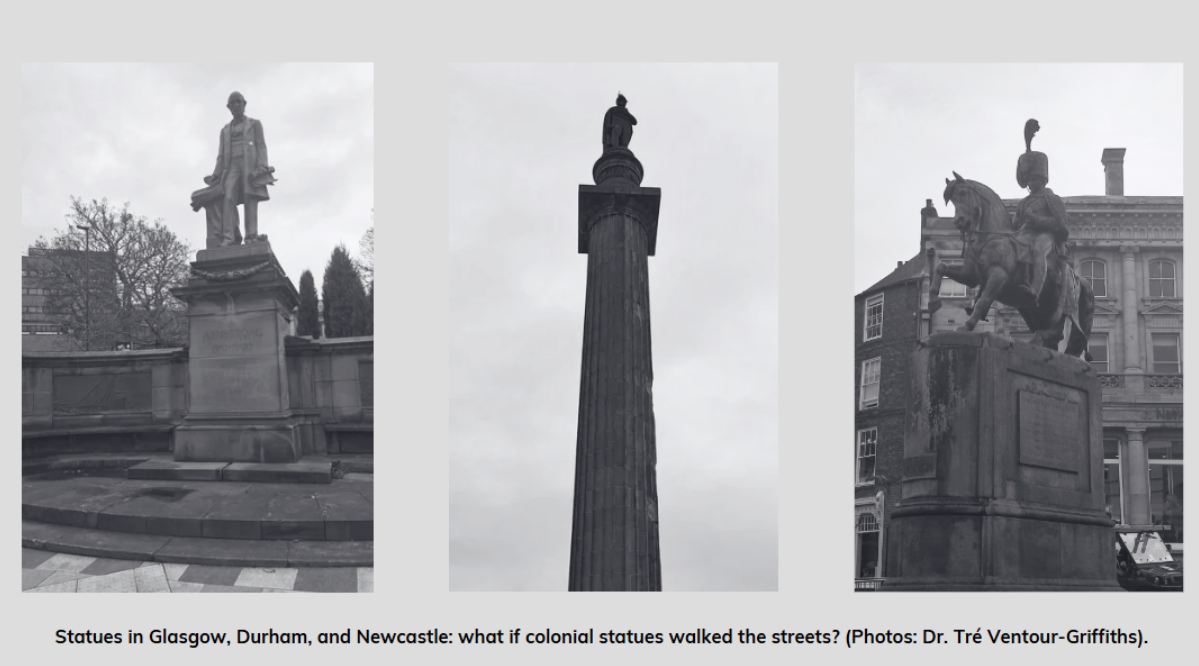
Rather than being dependent on a purely historical point of view, haunting offers a way to think about Britain’s colonial afterlives in the present. For instance, I struggle to visit spaces like museums, galleries, archives, country estates, or ports that once harboured slave ships, without feeling the shape of malevolent ghosts: enslavers, enslaved people, white heiresses, ship captains, the residual hauntings of racist riots… haunted while Black. The language of ghosts helps me consider colonial history not as a time-locked, but something that is perpetually unfolding that organises our thoughts, present-day institutional behaviours, emotional triggers, and unequal power dynamics. Contemporary aid, regardless of its glossy aesthetics, still bears the residue of Victorian missionary culture, white paternalism-, and maternalism, with white women who Kiandria Demone called “the emotional labourers of white supremacy.” These afterlives survive through processes like Britain’s imagined role as a saviour in countries it colonised, while nineteenth-century missionaries are echoed today by not only the women upholding the aid industry as emotional labourers, but the many who, in the image of DooleyGate, treat Global Majority countries as a play area – very Eat, Pray, Love. That emotional project shows who is ‘licensed’ as an expert and moral leader ahead of violence historically done by UK white women missionaries as “the largest mass movement of women in the nineteenth century.”
Hauntology emerges as a tool not only to think about modern humanitarianism marked by the ‘past’, but really how the public may consider their everyday relationships with historical time as a “wibbly wobbly timey wimey” idea of now. The ghost remains as a figure of the past’s return with the injustices of colonialism inherited by successive generations through media, politics, policy, and institutional behaviour. It appears in debates of museum collections, immigration anxieties, and the recurring obsession with royal nostalgia. Aid work is part of this afterlife upheld by white supremacy, including how global western institutions set the political agenda on climate change. But as cultural theorist Stuart Hall further writes, “Clearly, ‘the West’ is as much an idea as a fact of geography.”
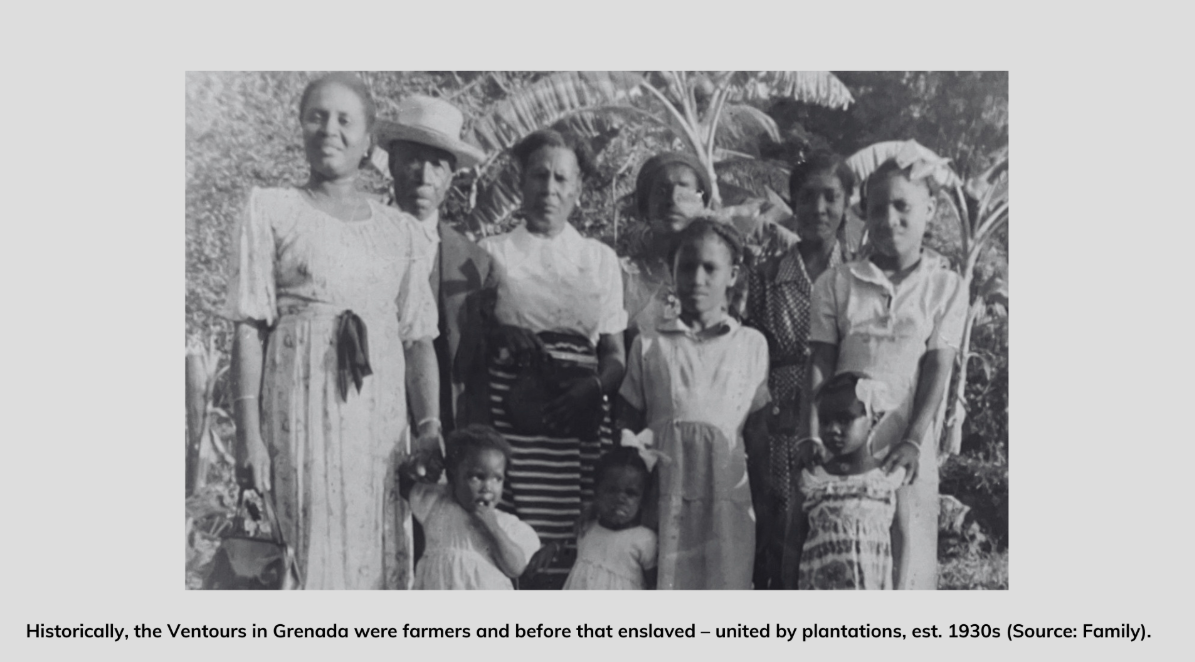
Yet, beneath the veneer of a history-only approach to our past, there lives a debate of spirit and our multiversal selves, less frequently discussed in academic history circles – let alone aid, charity, or development spaces. We might argue that today’s humanitarianism is a background haunting of the unpresent’s imperial decisionmaking. While some charities and do-gooder heritage organisations have acknowledged links to colonialism and enslavement, including the Joseph Rowntree Foundation and National Trust, in addition to the Church of England, these often end with motifs like plaques to acknowledge harm has been done. What these do is offer symbolic apologies that do not account for institutional behaviours that are shaped by the ghosts of empire lurking in policymaking’s dark corners. It does so while ignoring the emotional toll of white supremacy and the ease through which institutions treat ‘events’ that were genocides, as purely academic. Hauntology or better yet, “spectral studies”, may be a novel approach to the conversations already being had about the coloniality embedded in aid because it has capacity to prevent history from staying historical. So, this is where Black ghostliness may be a way into seeing Britain’s empire as not over and done with.
The persistence of these echoes demonstrates how colonial power survives not only through economics and knowledge, but the emotions. Institutional apologies for ‘past’ crimes can feel flimsy when we have yet to perform a true exorcism of that ‘past’, which illustrates how the past leaks into our present – time is out of joint. Framing past transgressions as stubborn phantoms maintains that time is everything everywhere all at once. What’s clear is that the way this has been made necessary is in-part due to the institutional gatekeeping that persists in British academic history. For instance, unlike more work in the US, frameworks like Critical Race Theory are not the norm in how British histories of enslavement are produced by British publishers or discussed at conferences and events. In Britain, these books often employ an emotional distance written through the white gaze because most of the publishing contracts are allocated to white historians who don’t talk about whiteness. Put simply, anti-Blackness gatekeeps Black folks out of publishing on imperial history. For those who are ‘allowed’, they are often forced to write like their white colleagues! I call this ‘academic race-play’: when proximity to Black ideas, worlds, and being ‘bodies’ is conceptually exploited by non-Black (but especially white) people and spaces to ensure their academic advancement. Similar persists in aid. Yet, routinely, if I want a critical or emotional take, I’m required to look to the places where plantation violence was more visible like the Caribbean and US. Expertise is racialised as white, while the Global Majority, racialised outside of whiteness, continue to be haunted by histories of border violence, white institutional terror, and economic relations with the British state, shaped by empire.
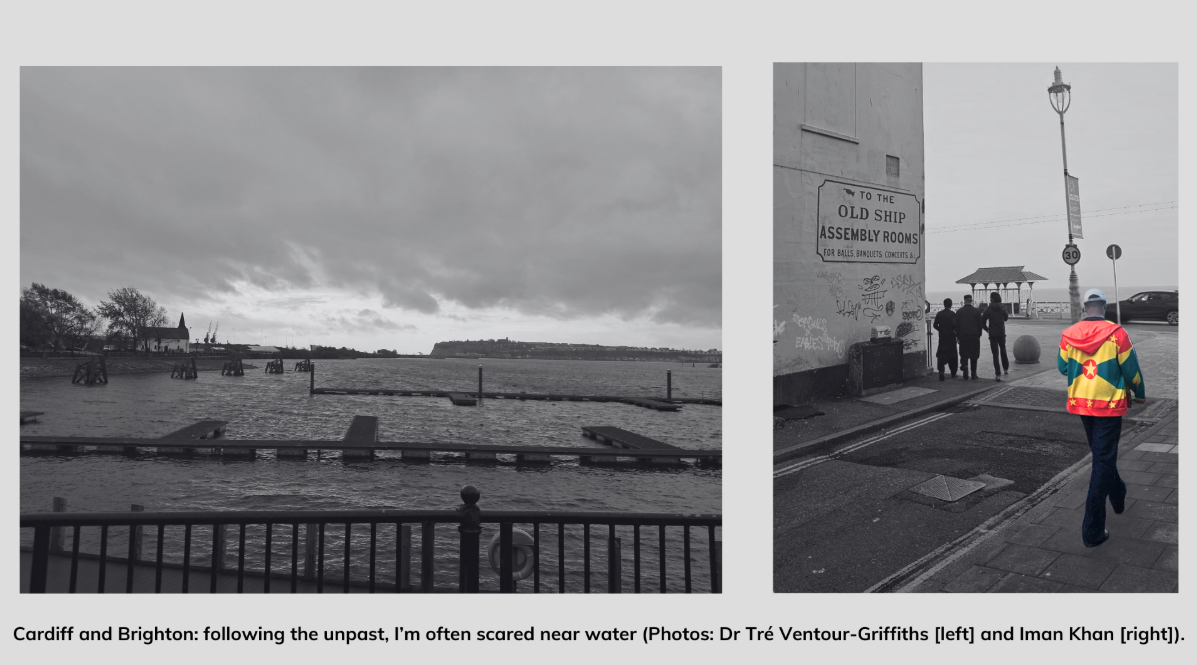
So, humanitarianism, thus, operates not only as a reply to manufactured inequality and consequence of colonisation, but as means to see itself on a global stage. I might argue that aid is just a back-pat for helping to ‘solve’ issues that this country, as a colonial power for four centuries, was instrumental in creating. The genocides the British Empire committed over several hundred years, such as the millions killed through racial enslavement on the ships and plantations, have later been upheld by continued imperial violence like how Black people continue to be drowned as refugees fleeing conflicts committed by countries that colonised ours. The anti-Blackness against refugees and asylum seekers speaks to an oceanic hauntology lubricated in colonial residue. Hauntings reveal harm and refuse to give up the ghost. We see internal bleeding, a living history, and statues that walk the streets. In the words of The Doctor, “Don't blink. Don't even blink. Blink and you're dead. They are fast. Faster than you can believe. Don't turn your back. Don't look away. And most of all, don't blink.”